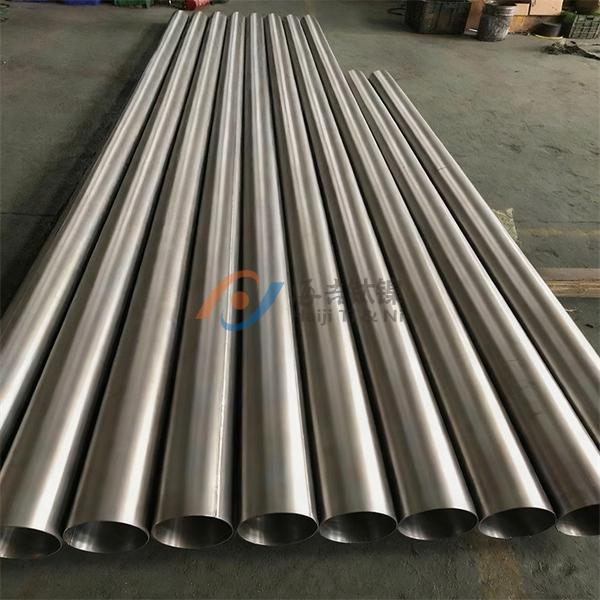
titanium tube
The core of titanium tube manufacturing lies in addressing the challenges posed by titanium's high chemical reactivity, low thermal conductivity, and susceptibility to oxidation.
Product Introduction
Product Introduction
Manufacturing process and quality control
The core of titanium tube manufacturing lies in addressing the challenges posed by titanium's high chemical reactivity, low thermal conductivity, and susceptibility to oxidation.
Melting: Vacuum induction/electron beam melting, with strict control of impurities (carbon, nitrogen, hydrogen) to ensure purity and toughness.
Molding:
Seamless tube: ingot casting → high-temperature piercing / extrusion → multi-pass cold drawing → intermediate annealing (to eliminate stress and prevent cracking).
Welded pipe: steel strip coiling → TIG welding or laser beam welding (LBW) → weld seam leveling.
Finishing and inspection:
Non-destructive testing: Eddy current testing (ET) for detecting weld seams and surface defects; Ultrasonic testing (UT) for detecting internal porosity.
Hydrostatic/airtight test: Ensure no leakage.
Straightness control: Ensure installation accuracy.
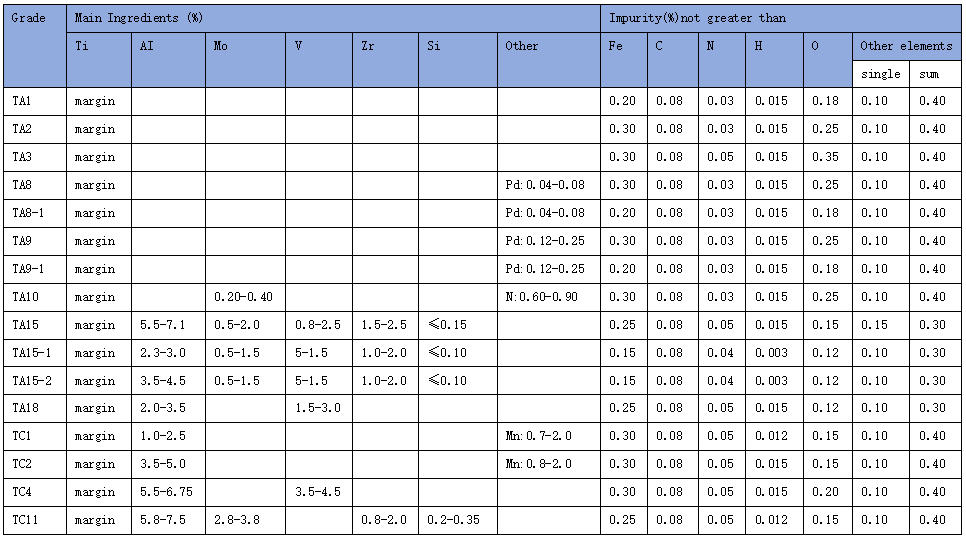
Chemical composition of titanium and titanium alloys
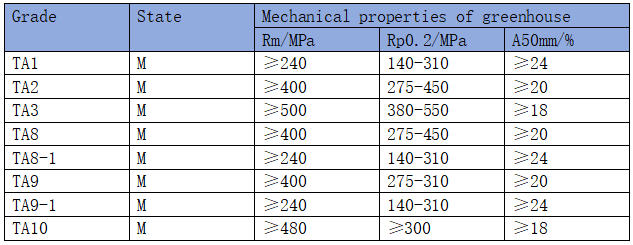
Greenhouse mechanical properties of pipe materials